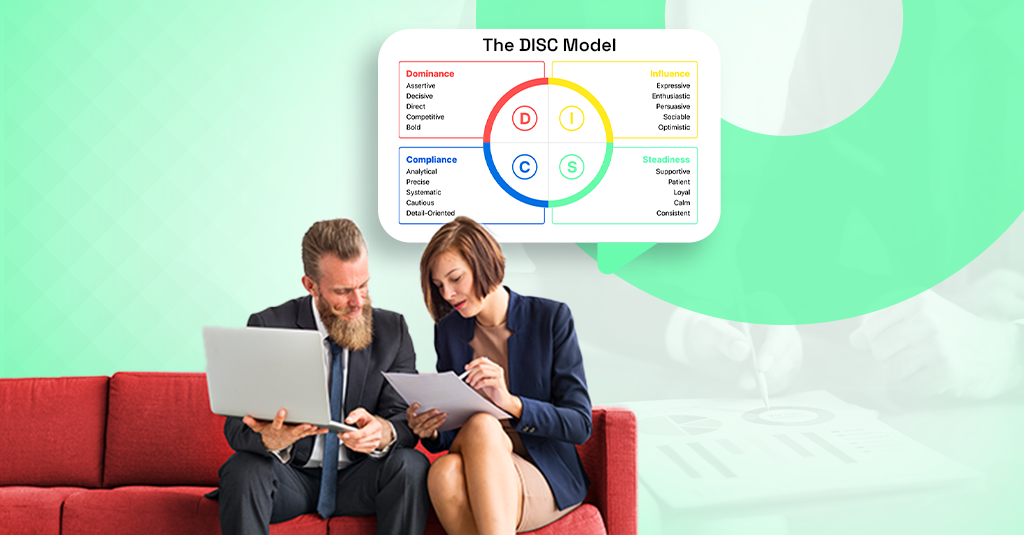

If you work in L&D, you’re not short of models, frameworks or tools. What often makes the difference is something that helps real people have better conversations, navigate tensions and grow in the flow of work. DISC assessment for teams can support exactly that. Research on the DISC assessment shows it’s widely used to improve communication, productivity and teamwork by giving people a shared language for behaviour. Instead of being “yet another workshop”, Discflow offers a simple language for behaviour and emotion that fits alongside the programmes, learning and development tools and people development strategies you already run.
Why DISC Assessments for Teams Belong in Your L&D Toolkit
Most organisations already have values, leadership frameworks and competency models. The problem isn’t a lack of ideas; it’s the gap between the framework on paper and the behaviour in the room.
DISC assessment for teams helps close that gap by:
- Giving people a straightforward way to talk about how they show up at work.
- Normalising differences in pace, communication style and decision-making.
- Turning vague feedback like “you’re a bit much in meetings” into something more specific and coachable.
Discflow assessments focus on observable behaviour, not labels or deep personality analysis. Profiles cover general characteristics, prominent behaviours, strengths, limitations and potential stressors, so managers and coaches have plenty to work with in development conversations. That makes Discflow a very practical learning and development tool for every level of the organisation.
How to Integrate DISC Assessments into Existing People Development Strategies
To make DISC stick, it has to feel connected to what you’re already asking people to do, not a competing model.
You can start by linking the DISC assessments to:
Leadership frameworks
Show how different DISC styles support expectations like “drives results”, “collaborates effectively” or “leads through change”.
Values and culture
Use DISC language to explore “what our values look like in action” for different styles, rather than assuming everyone will express them in the same way.
Development planning
Bring profile insights into PDPs and coaching plans so leaders and team members can set goals tied to real behavioural shifts, not just generic ambitions.
When you do this, DISC stops being a standalone initiative and becomes part of your broader people development strategies.
Practical Ways to Use DISC Training for Teams
You don’t need to redesign your entire curriculum to benefit from DISC. You can start small and weave it into key moments
1. Team workshops and Away Days
Before a team day, ask everyone to complete a DISC assessment (using Discflow Core 2.0 and Group 2.0 where appropriate).
In the session, you can:
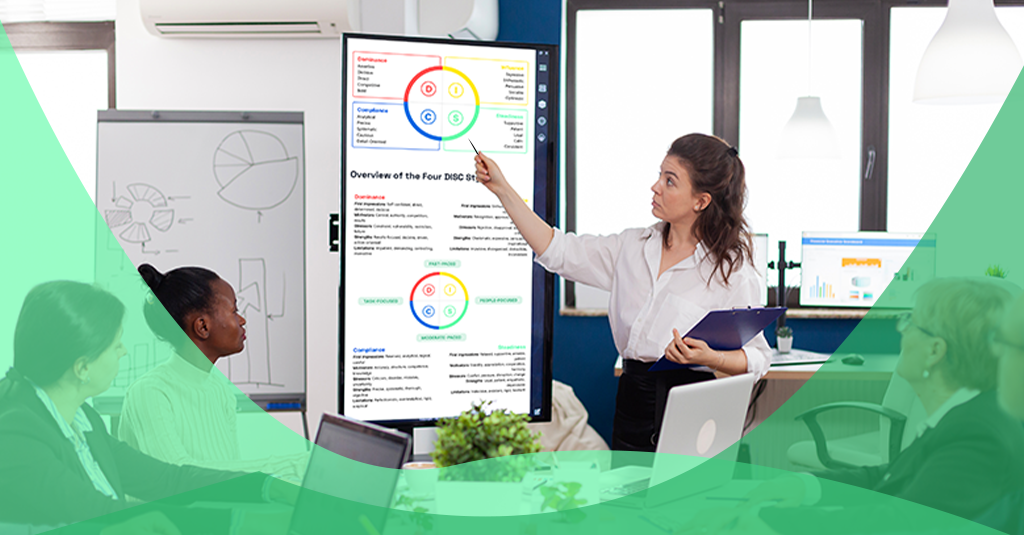
- Share a visual of the team’s style and emotional intelligence mix.
- Explore where they move fast, where they might get stuck and how they behave under pressure.
- Agree on a few “team rules” about communication, meetings and decision-making based on what they’ve discovered.
This is essentially DISC training for teams, but grounded in their own data and day‑to‑day reality rather than abstract theory.
2. Leadership and Manager Development
In leadership programmes, DISC brings your content to life. You can:
- Use Discflow Leader profiles to explore how different styles lead, coach and give feedback.
- Help managers see when a natural strength (for example, being decisive) becomes a stressor (for example, steamrolling others).
- Practise adapting their style to get the best out of different team members.
Discflow integrates DISC with emotional intelligence, so you can have deeper conversations about how leaders are experienced by others, not just what they intend. When you do this consistently, you’re effectively running Corporate DISC training as a thread through your leadership pathway, not just a one‑off module.
3. Everyday 1:1s and Performance Conversations
Once managers understand their own style and their team’s, it becomes much easier to have honest, respectful conversations about:
- How people prefer to receive feedback.
- What they find stressful or motivating.
- Which situations are likely to trigger misunderstandings.
The Discflow Profile Feedback Manual gives facilitators and managers a clear structure for these conversations, from setting the context and positioning the model, through self‑validation, to co‑creating an action plan and planning follow‑up. This is where your DISC behavioural assessment turns into a real‑world learning and development tool: it gives managers a language and process to coach with, not just a report to file away.
How to Measure the Impact of DISC Behavioural Assessments in L&D
If you’re putting DISC assessments into your people development strategies, it’s worth tracking what changes. You don’t need a complex evaluation model to see useful signals.
You could look at:
- Team collaboration, short pulse questions on communication, trust and “how well this team works together” before and a few months after DISC work.
- Quality of conversations, feedback from managers on how 1:1s, feedback discussions and team meetings feel – are they clearer, calmer, more honest?
- Real examples, not just scores. Stories of decisions, conflicts or projects that went better because people used DISC language or adapted their style.
- Follow through on actions, whether goals and action steps from Discflow feedback sessions are actually being revisited and updated over time.
- Over time, these signals help you show that DISC isn’t just an interesting workshop, but a practical part of how your organisation builds better conversations and stronger teams.
Over time, these signals help you show that DISC isn’t just an interesting workshop, but a practical part of how your organisation builds better conversations and stronger teams.