
Modern organisations depend on collaboration, clear communication and adaptive leadership. Using a DISC personality assessment, leaders can quickly understand different workplace communication styles and improve how teams work together. As teams spread across departments, locations, and cultures, leaders must navigate complex interpersonal dynamics while keeping everyone aligned and focused.
In this environment, technical expertise alone is not enough; what often differentiates effective teams is their ability to understand behaviour, their own and that of others. This capability, increasingly referred to as behavioural intelligence, is strengthened when leaders use a DISC personality assessment to make workplace communication styles visible, practical, and actionable.
What Is Behavioural Intelligence?
Behavioural intelligence is the ability to recognise behavioural patterns, understand how behaviour influences others, and adapt communication and interaction accordingly. It moves beyond theory, helping people make better choices in real conversations, meetings, and decisions.
In practice, behavioural intelligence helps leaders notice how colleagues approach decisions, respond to pressure, and collaborate, then adjust their approach to get the best from each person. When supported by a DISC personality assessment, this awareness becomes a shared language that teams can use to discuss and improve how they work together.
Why Behaviour Matters at Work
Every interaction at work is shaped by behaviour: how people speak up, listen, decide, and follow through. Even small differences in style can either accelerate collaboration or quietly create friction.
Consider these everyday workplace communication styles:
- Some people communicate in a direct and decisive way, pushing for fast decisions and clear outcomes.
- Others prefer collaborative discussion before committing, wanting to hear different perspectives first.
- Some colleagues carefully analyse information and weigh risks before acting.
- Others move quickly, testing ideas and adjusting as situations evolve.
None of these approaches are inherently right or wrong, yet when they are misunderstood, tension builds. A concise communicator can be seen as abrupt, while a reflective communicator may appear hesitant; an analytical colleague may be perceived as overly cautious. Behavioural intelligence and the practical insight from a DISC personality assessment, helps individuals recognise these different workplace communication styles and respond constructively instead of taking them personally.
Introducing DISC: A Framework for Behavioural Intelligence
Many organisations use behavioural frameworks to help teams explore communication patterns and working styles. One of the most widely recognised is the DISC model, which describes four behavioural tendencies influencing how individuals interact with others.
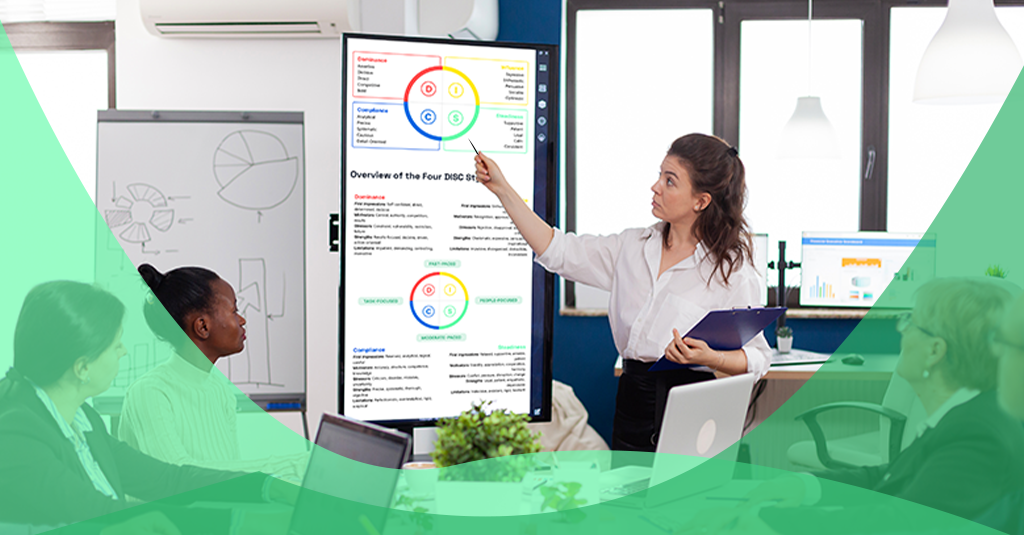
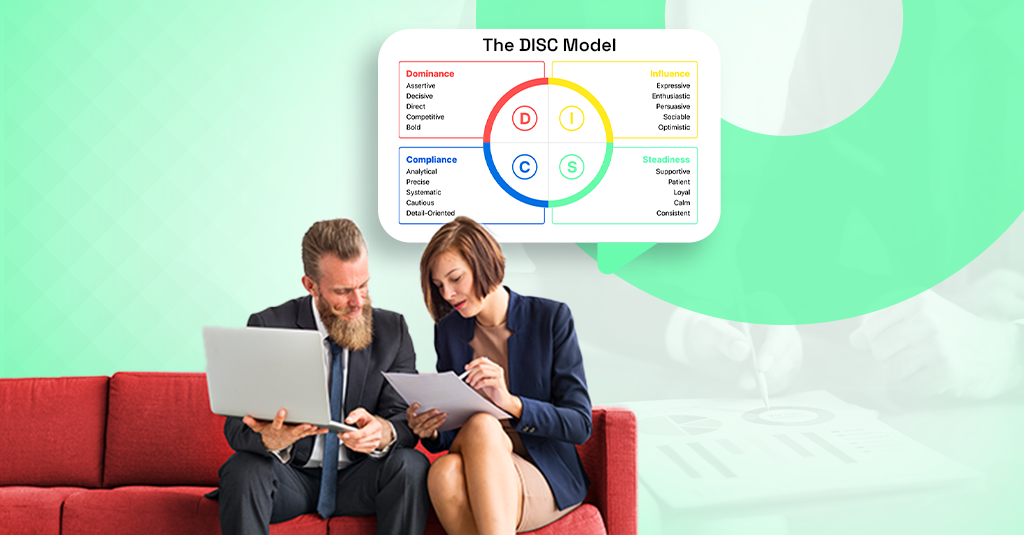
The DISC personality assessment, based on the work of psychologist William Moulton Marston, categorises people into four core styles: Dominance, Influence, Steadiness, and Compliance (often called DISC). It focuses on observable behaviours—how people tend to communicate, make decisions, and respond to their environment, rather than on labels or fixed traits.
Because the DISC model is simple, it has become widely used in:
- Leadership development programmes
- Team communication workshops
- Organisational development and culture initiatives
- Executive and performance coaching
These tools are particularly effective when the DISC personality assessment is positioned as part of a broader behavioural intelligence platform, rather than a one‑off test.
From Behavioural Insight to Behavioural Intelligence
Traditional personality assessments often focus on describing someone’s style in a report or workshop. While this creates useful insight, it doesn’t automatically lead to better conversations or stronger teams.
Behavioural intelligence takes the next step. Instead of stopping at “what is my DISC style?”, it asks more practical questions such as:
- How does my default communication style affect colleagues with different DISC profiles?
- How do behavioural differences influence decision making, alignment, and accountability?
- How can I adapt my approach to build trust and reduce friction in my team?
These questions help leaders move from awareness to action. When teams use DISC personality assessment results as a shared map, they can design new habits, meeting structures, feedback norms, and collaboration rules, that support more effective workplace communication styles.
The Role of Emotional Intelligence
Alongside behavioural models like DISC, emotional intelligence has become a critical part of leadership development. Emotional intelligence focuses on recognising emotional signals in oneself and others, understanding how behaviour affects relationships, and choosing constructive responses—especially under pressure.
When DISC and emotional intelligence are combined, leaders gain a deeper picture of workplace dynamics. They can see not only how they communicate, but also how their behaviour makes others feel, and how stress, change, or conflict may affect different DISC communication styles at work. This integrated view helps leaders adapt in ways that are both behaviourally smart and emotionally aware.
Discflow’s behavioural intelligence platform is designed around exactly this combination: clear DISC insight plus emotional intelligence indicators that show how behaviour and emotion drive day‑to‑day performance.
How a DISC Personality Assessment Improves Communication at Work
Using a DISC personality assessment for team communication turns abstract ideas into specific, practical actions teams can take. Here are four core ways DISC improves workplace communication:
1. Creating a Shared Language for Behaviour
Without a shared framework, feedback about behaviour can feel vague or personal. DISC gives teams neutral, descriptive language—“high D”, “I‑style energy”, “S‑style support”, “C‑style detail”—to describe workplace communication styles without judgement.
This makes it easier to discuss patterns such as talking over others, avoiding conflict, or over‑analysing decisions. Instead of “you’re difficult”, conversations can shift to “when my D‑style pushes for speed, how does that impact your S‑style need for stability?”.
2. Reducing Misunderstandings and Conflict
Many workplace conflicts are not about intent but about behaviour being interpreted through a different lens. For example:
- A D‑style leader’s direct email may be read as rude by an S‑style colleague who values harmony.
- An analytical C‑style professional may ask detailed questions that an I‑style colleague interprets as criticism.
By mapping the DISC communication styles at work, teams can anticipate these differences and reframe them as strengths rather than threats. This reduces emotional friction and keeps conversations focused on outcomes.
3. Tailoring Communication to the Audience
Behavioural intelligence is about adapting, not asking everyone to behave the same way. Once you know someone’s DISC profile, you can flex your approach to suit their preferences:
- With D‑style colleagues, be brief, focus on results, and get to the point quickly.
- With I‑style colleagues, allow time for discussion, ideas, and positive energy.
- With S‑style colleagues, provide reassurance, context, and a steady pace of change.
- With C‑style colleagues, bring data, structure, and clear rationale.
Using DISC personality assessment results in this way makes meetings more productive, emails clearer, and feedback conversations less stressful.
4. Strengthening Collaboration and Decision Making
When teams understand how each style contributes to problem‑solving, they can design better decision processes. For example, they might:
- Use D‑style energy to set direction and drive progress.
- Leverage I‑style enthusiasm to build engagement and stakeholder support.
- Rely on S‑style steadiness to anticipate impact on people and culture.
- Tap C‑style analysis to test assumptions and reduce risk.
This deliberate blend of DISC communication styles at work leads to more balanced decisions and more resilient teams. Over time, it also builds a culture where difference is seen as an asset rather than a source of tension.
When to Use a DISC Personality Assessment in Your Organisation
To turn insight into habit, organisations need simple, repeatable practices that keep behavioural intelligence visible in daily work. Here are practical ways to use DISC personality assessment for team communication:
Make DISC Visible in Everyday Tools
- Add DISC icons or shorthand to collaboration tools, team boards, and profiles so colleagues can quickly recall each other’s preferences.
- Include a short “How to communicate with me” section in team charters, drawing directly on DISC results.
Build DISC into Meetings
- Begin key meetings by quickly scanning whose styles are in the room and what might be missing—for example, is there enough S‑style to think about impact on people, or C‑style to challenge assumptions?
- Rotate meeting roles (chair, timekeeper, devil’s advocate) to ensure each DISC style can contribute in a way that fits their strengths.
Use DISC for Feedback and Coaching
- In one‑to‑ones, explore how each person’s style helps and hinders them in specific situations such as conflict, presentations, or negotiations.
- Encourage managers to frame feedback in behavioural terms—“when your I‑style energy takes over in meetings, here’s how it impacts others”—instead of focusing on personality.
Integrate DISC into Onboarding and Leadership Development
- Introduce new hires to the team’s overall DISC profile so they understand existing workplace communication styles from day one.
- Build DISC‑based modules into leadership programmes to help managers adapt their style across hybrid, cross‑functional, and global teams.
The Evolution of Behavioural Development Platforms
Historically, many assessments produced a one‑off report and a single workshop, with limited follow‑through. Modern behavioural intelligence platforms have evolved to integrate behavioural frameworks, emotional indicators, and practical workplace development tools into an ongoing learning journey.
Established providers such as Wiley, Insights Learning & Development and Thomas International have introduced behavioural frameworks to millions of professionals worldwide. Newer platforms like Discflow extend this approach by combining DISC personality assessment tools with emotional intelligence insights and ready‑to‑use resources for workshops, leadership programmes, and consulting.
This shift from static assessment to a platform enables HR, L&D leaders and external coaches to embed behavioural intelligence into culture, not just training events.
When to Use DISC Personality Assessment in Your Organisation
If you are considering how DISC improves workplace communication in your organisation, start with specific use cases rather than generic training.
Common high‑impact entry points include:
- New leadership teams that need to build trust quickly
- Project teams working across functions, time zones, or cultures
- Customer‑facing teams where communication directly affects revenue and retention
- Organisations navigating change, restructuring, or hybrid‑working challenges
In each case, using a DISC personality assessment for team communication gives people a fast, practical toolkit for understanding differences, reducing friction, and aligning around shared goals. When this is combined with emotional intelligence and clear follow‑up actions, it becomes a powerful driver of behavioural intelligence across the business.
To explore how Discflow’s behavioural intelligence platform could support your teams, consider booking a discovery call, running a pilot workshop, or certifying an internal champion in a DISC‑based methodology.
Building Behaviourally Intelligent Teams with DISC
Behavioural intelligence is rapidly becoming a core leadership capability in modern organisations. As workplaces become more diverse and complex, the ability to recognise behavioural patterns and adapt communication accordingly can dramatically improve collaboration and performance.
A DISC personality assessment gives leaders and teams a practical framework for understanding workplace communication styles and turning insight into everyday behaviour change. When combined with emotional intelligence and supported by a behavioural development platform such as Discflow, DISC communication styles at work become a foundation for stronger teams, more effective leaders, and more constructive conversations across the organisation.