

Even the most talented teams face communication breakdowns. Emails are misread. Feedback feels personal. Tensions simmer under the surface. The problem? Most communication tools focus only on behaviour, not on the emotional layer that shapes how people speak, listen, and respond.
That’s why DISC with emotional intelligence (EI) is a game-changer. While DISC helps teams understand how they behave, adding EI reveals how emotions influence those behaviours, especially under pressure. Together, they create a more complete, human-centred framework for improving team communication.
This article explores how DISC + EI can help teams connect more clearly, adapt more skilfully, and build the trust that communication depends on.
What DISC Brings to Communication
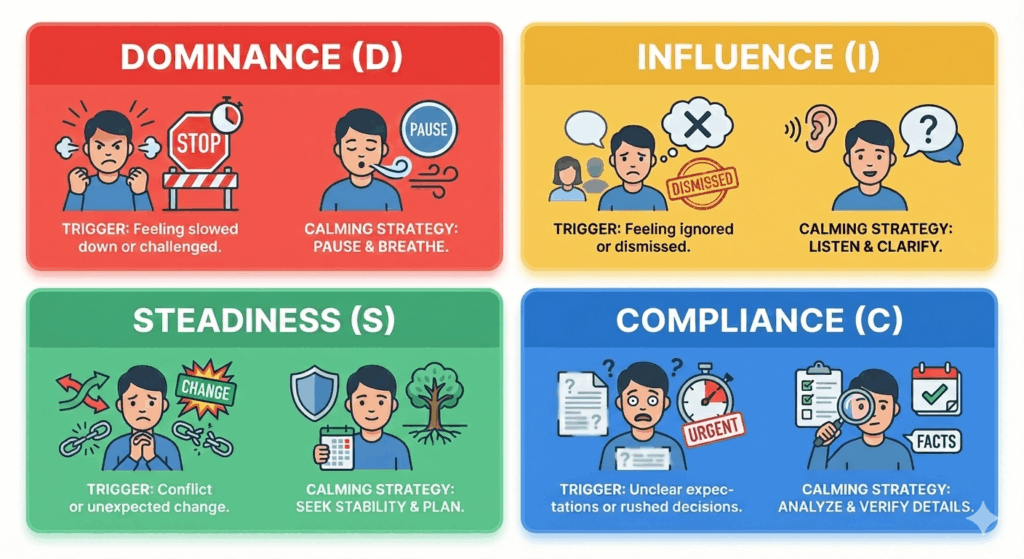
DISC is a behavioural model that identifies four core styles:
- D (Dominance): Fast, direct, action-oriented
- I (Influence): Social, enthusiastic, persuasive
- S (Steadiness): Calm, supportive, consistent
- C (Compliance): Precise, analytical, cautious
In a team setting, DISC helps:
- Decode communication preferences
- Identify who prefers brevity vs. detail
- Spot potential style clashes
- Build appreciation for diverse approaches
But on its own, DISC can only go so far. Knowing someone is a High D or a High C doesn’t explain why they shut down under stress or become defensive during feedback. For that, you need emotional intelligence.
The Emotional Intelligence Advantage
Emotional intelligence (EI) is the ability to recognise and manage your own emotions and understand those of others. In communication, EI enables people to:
- Stay present and composed under pressure
- Listen actively, even when challenged
- Pick up on emotional cues and body language
- Respond with empathy and clarity
When EI is combined with DISC, communication becomes less reactive and more intentional.
For example:
- A High D learns to soften their tone when team members feel overwhelmed
- A High I recognises when their enthusiasm is masking someone else’s hesitation
- A High S becomes more comfortable giving feedback
- A High C learns to tolerate ambiguity in live discussions
These adjustments require emotional insight, not just behavioural awareness.
Get insight into your EI and DISC style with the Core 2.0 Report to better understand how both shape the way you communicate.
How Discflow Enhances Team Communication
Discflow combines emotional intelligence with the DISC model, creating a tool that reveals both how people communicate and how emotions influence those interactions.
With the Group 2.0 Report, you can:
- Identify emotional triggers that affect communication
- Offer practical tips for adapting across styles
- Highlight stress responses and recovery strategies
- Provide team-level snapshots to surface group patterns
Whether used in workshops or 1:1 coaching, Discflow helps teams:
- Build shared language for behaviour and emotion
- Recognise tension before it escalates
- Foster curiosity over judgment in communication
Common Communication Pitfalls (And How DISC + EI Helps)
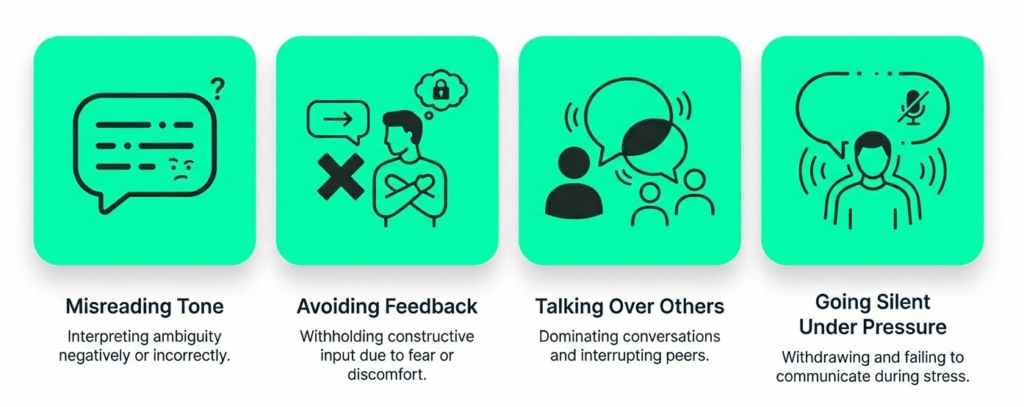
- Misreading Tone
A short message from a High D might seem rude to a High S. With EI, the team learns to clarify intent before making assumptions. - Avoiding Feedback
A High S may delay feedback to keep harmony. With emotional intelligence, they learn how to express concerns with care. - Talking Over Others
A High I may dominate conversation. EI helps them notice social cues and make space for others. - Going Silent Under Pressure
A High C may withdraw. With EI insights, they develop coping strategies, and teams learn how to re-engage them constructively.
Why Teams Need Both Behaviour and Emotion
Communication isn’t just about what is said; it’s about how it lands. DISC explains behavioural style, and EI explains the emotional filters that shape tone, pace, and reactions.
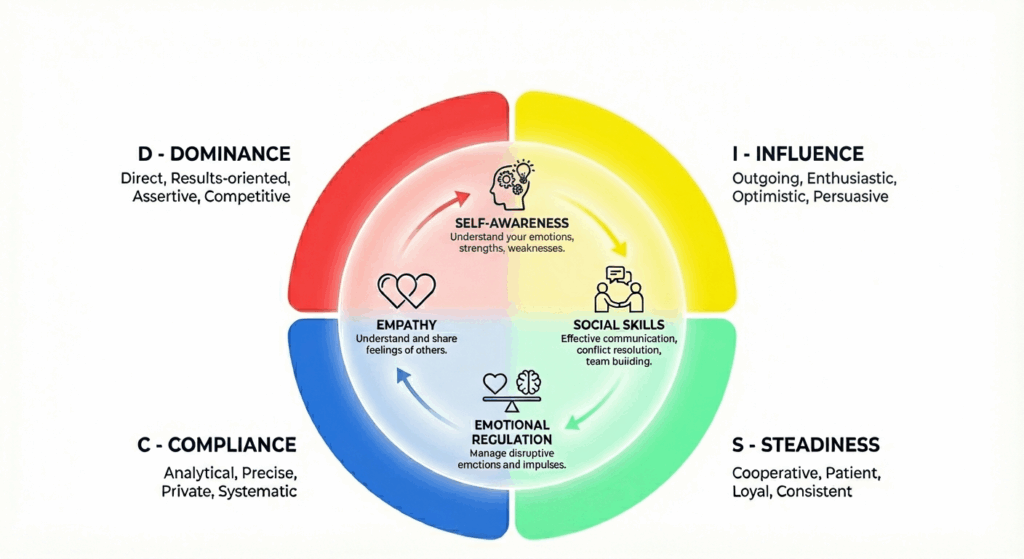
Together, they create a toolkit for:
- Giving and receiving feedback more skilfully
- Communicating across differences
- Building psychological safety
- Responding vs. reacting
Getting Started: Practical Use Cases
Teams can apply DISC + EI in:
- Communication workshops
- Conflict resolution training
- Onboarding and team formation
- Project kick-offs and retrospectives
- Coaching and performance reviews
The goal isn’t to change who people are; it’s to help them adapt with emotional intelligence.
Final Thought: Smarter Communication Starts with Insight
Every workplace wants better communication. But without understanding the emotional drivers behind behaviour, most tools fall short.
DISC + EI offers a smarter, more complete way to help people:
- Express themselves with clarity
- Adapt to others with empathy
- Resolve tension with confidence
Explore