

Ever wondered why one teammate wants results immediately and another wants to brainstorm it over a cup of coffee? Why does one prefer steady routines and why is it necessary for the other to have every detail double-checked? Welcome to DISC. Get to know the magical four letters that explain it all and also the endless workplace dynamics.
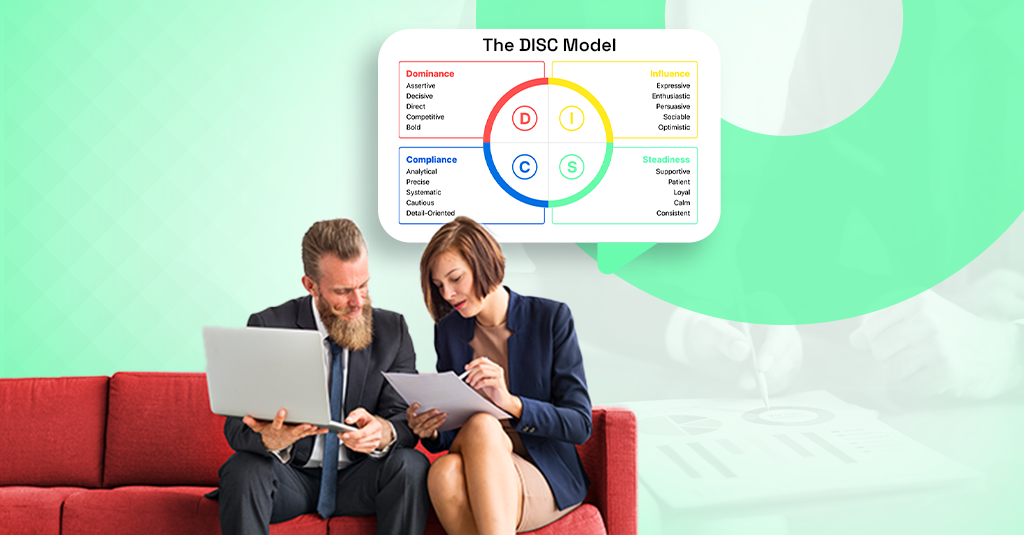
The DISC personality assessment categorises behaviour into Dominance, Influence, Steadiness and Compliance. A team leader or managers get a simple way to understand why people act, communicate and make decisions differently. At discflow, we believe mastering these different DISC personality profiles is the key to building stronger teams and smarter leadership.
Know what people management at work is
People management in workplaces has evolved beyond task allocation and performance reviews. Team leads and managers tend to understand what drives behaviour, communication and motivation in their teams. If the idea behind people management is kept crystal clear, then it becomes easier to recognise individual differences.
This is where the DISC personality test becomes a practical workplace tool rather than just another HR exercise.
Modern organisations are navigating hybrid work, multiple diverse teams and performance pressures. A clear DISC personality profile gives leaders a shared language for diverse behaviour. It supports better delegation, clearer communication and more balanced teams. It helps managers lead people and not just the processes.
Understanding the Four DISC Styles at Work
The DISC profile offers a practical approach for understanding different behaviours at work. Most people come up with a blend of all four styles, that is a fact. But the focus is usually kept on their strongest tendency to better understand how they communicate, make decisions and respond within a team setting.
D-Type Personalities (Dominance)
Workplace Traits
A DISC personality test identifies D-type squads as direct, competitive and results-oriented. The peeps from this branch are known for decisiveness and a bias for action. A D-leaning DISC personality profile aligns with target-driven roles. They are good with project ownership or operational roles.
That said, confidence alone does not equal readiness. A dominant newcomer can display leadership potential but still require experience and organisational understanding before formally leading a team.
To Channel Their Drive
Leaders can provide clear KPIs and measurable outcomes. To neutralise impatience or overly forceful behaviour, managers can reinforce collaboration standards. They can arrange for structured feedback processes.
I-Personality Type (Influence)
Workplace Traits
The DISC personality assessment states that the I-type personalities in the workplace are sociable. They are persuasive and even enthusiastic. Their DISC personality profile mostly suits client-facing roles. They perform well in marketing, business development or team engagement initiatives.
To Keep Them Focused
Leaders can incentivise I-type personalities through recognition. Even brainstorming opportunities and presentation roles can help. Written action points and accountability check-ins help balance creativity with delivery.
S-Type Personality (Steadiness)
Workplace Traits
The S-type personality is dependable, patient and team-oriented. A DISC personality test highlights their strength in coordination or employee relations. They value firmness and consistent processes.
To Support Their Stability
Managers can incentivise S-types by acknowledging their reliability. These team members can be involved in mentoring or team cohesion efforts.
C- Personality Types (Compliance)
Workplace Traits
C personality types are analytical. They appear precise and quality-focused. Their DISC personality profile frequently aligns with finance, compliance, research or technical roles where accuracy is really critical.
To Balance Them with Pace
Leaders can stimulate C-type personalities by providing detailed briefs and logical reasoning behind decisions. Clear deadlines and defined quality benchmarks might enhance efficiency.
Strong teams are always well-synchronised with self-awareness. High-performing teams are built on understanding and not assumptions. A well-designed DISC personality test helps organisations understand core DISC styles. Leaders can translate each DISC personality profile into practical strategies. Managers gain the clarity to communicate better. They tend to delegate smarter and reduce workplace friction.
So, are you ready to transform behavioural insight into real performance gains at your workplace? Discover how discflow can help you put DISC to work.