

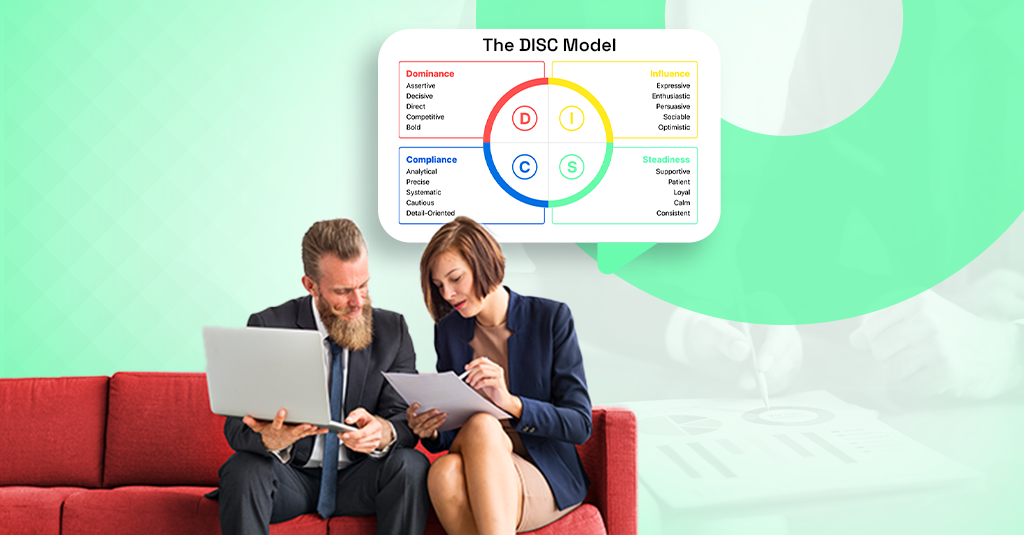
DISC is a well-known behavioural assessment. This model is designed to help people understand how they tend to act and communicate. Various workplaces are the best possible setting for this test. Rather than measuring only intelligence or mental health, the DISC profile focuses on observable behavioural tendencies.
The theory behind DISC dates back to 1928. An American psychologist, William Moulton Marston, published his “Emotions of Normal People”. Interestingly, Marston was not developing a workplace assessment. He was exploring how individuals respond emotionally to different environments. The assessment tools that are widely used today were developed later by other researchers.
But before we move on with DISC assessment accuracy, let’s discover what it actually signifies.
Know what DISC is
DISC personality theory categorises behaviour into four broad styles. ‘D’ is dominance. It describes individuals who are direct and focused. They are comfortable making fast decisions. ‘I’ refers to influence. This is directed to those who are sociable, persuasive and energised by interaction. Steadiness for ‘S’ captures people who are calm, patient and supportive. ‘C’ for Compliance represents those people who are analytical and motivated by accuracy and high standards.
Understand the Accuracy of DISC Assessment
DISC measures behavioural preferences. Its accuracy lies in consistent behavioural insight. This gets even better when this is paired with professional interpretation.
When it comes to DISC assessments in the UK, accuracy does not get delivered with magic. It combines reliability with practicality. At DISCFLOW, some factors make all the difference.
Input and Insight
A DISC profile is accurate according to the responses behind it. When participants answer authentically and not aspirationally, DISC assessment accuracy rises sharply. DISCFLOW strengthens this with self-rater feedback and blind spot analysis. With these structures, your personalised DISC profile reflects reality and not wishful thinking.
Depth Beyond the Letters
Anyone can label an assessment result with D, I, S or C. True accuracy comes from emotional insight. DISCFLOW combines DISC and emotional intelligence insights. This unveils triggers, resilience patterns, feedback styles and decision-making tendencies.
Real Impact
Behaviour shifts in teams. DISCFLOW provides group distribution visuals, team strengths and risk analysis. There is even a focus on scenario-based strategies and communication maps. This involves turning data into practical leadership impact.
Accuracy is never just about scores. It is always about actionable clarity.
The Myths Behind DISC
- DISC highlights behavioural preferences. This is useful for communication and leadership insight. DISC provides practical insights into workplace behaviours. It is a myth that it is just a basic personality quiz.
- Faking yourself is not easy. This is even a common myth surrounding DISC assessments in the UK. The tests are not just simplistic personality tests. In reality, DISC measures observable workplace behaviour. And not fixed personality traits. DISC Assessment Accuracy is grounded in reliability testing, global norming and a validated behavioural framework. This is far beyond online quizzes.
- Not all digital service providers meet the same psychometric standards. DISC Assessment Accuracy depends on validated norm groups.
Do not follow the misbeliefs here and there. You can check out DISCFLOW’s reliability coefficients. Contact for DISC assessment training programmes. Get your hands on DISC assessment results and other ongoing research.
The real power of DISC assessments in the UK lies in how you use them. Behavioural assessments should not fully depend on guesswork. We know accuracy comes from application. DISCFLOW helps you decode DISC assessment results with much clarity. You can build confident teams at your workplace. You can improve your communication game and make smarter decisions by leveraging DISC with purpose. Transform insights into accurate business success with DISCFLOW today.